
Somatic Experiencing (SE): A Body‑First Approach to Healing Trauma
When you’ve lived through something overwhelming, it can feel like your mind understands you’re “safe now,” but your body didn’t get the memo. Somatic Experiencing (SE) is a gentle, body-based approach to trauma healing that helps your nervous system complete the stress responses that got interrupted during difficult events—so you can feel more regulated, present, and connected in daily life.
What is Somatic Experiencing?
Somatic Experiencing was developed by Dr. Peter Levine. It focuses on how trauma lives in the body—through tension, bracing, numbness, or chronic activation—rather than solely as a story in the mind.
SE works by tracking subtle body sensations (like warmth, tingling, pressure, or breath shifts) to guide the nervous system back toward safety and balance.
The aim isn’t to relive the past. Instead, SE helps you build capacity to be with small pieces of activation at a time, so your body can safely release them.
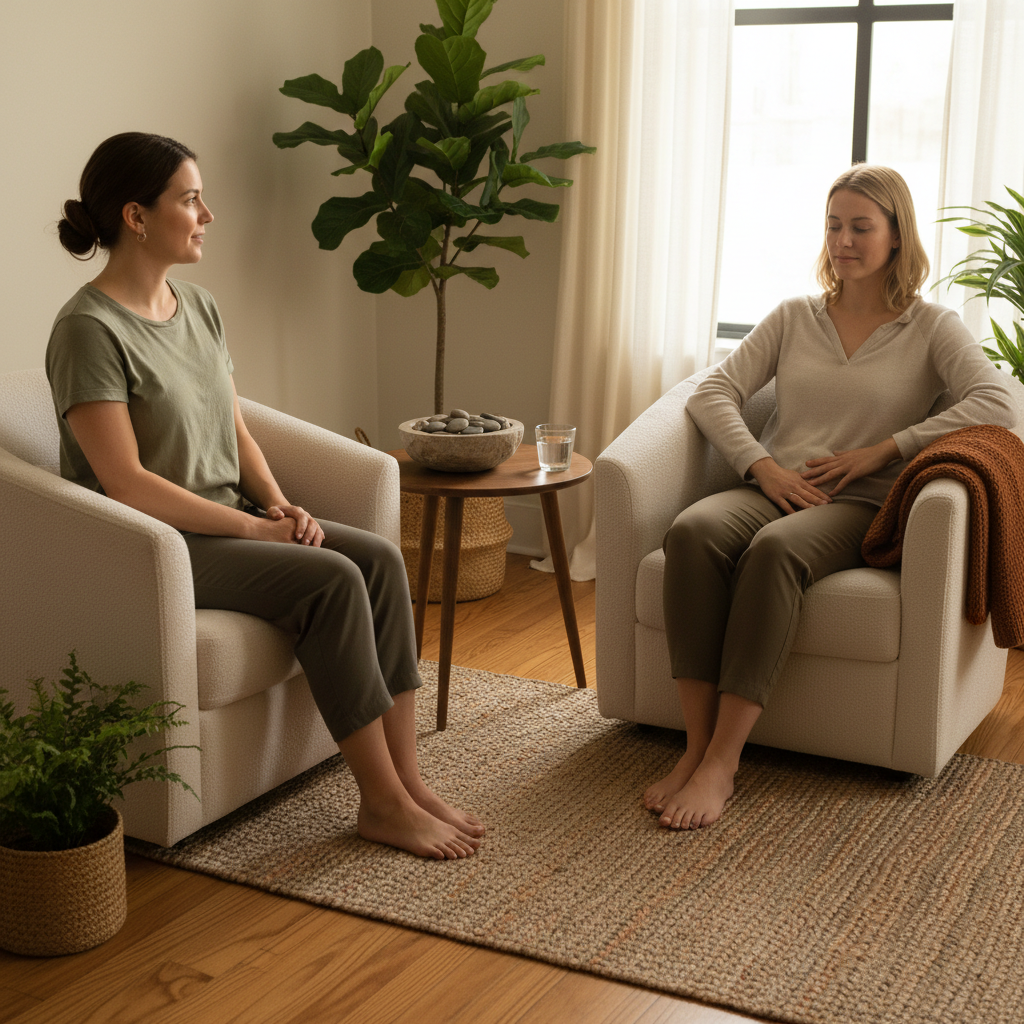
Somatic Therapy
How trauma shows up in the body
Fight: irritability, jaw clenching, a drive to push or control.
Flight: restlessness, racing thoughts, trouble settling or sleeping.
Freeze: numbness, fogginess, feeling “stuck” or disconnected.
Fawn/appease: over-accommodating, difficulty sensing your own needs. SE supports all of these states by helping your system pendulate—gently move—between activation and calm, building resilience with each cycle.
What a session can look like
Safety first: We slow down, orient to the room, and establish what feels supportive right now.
Body tracking: Together, we notice small sensations—temperature, posture, breath, tension, or areas of ease—without judgment.
Resourcing: We identify what brings steadiness (a grounding object, a memory of a supportive person, a stable part of your body) and return to it often.
Titration and pendulation: Rather than diving into the most intense material, we touch into small amounts of activation and then come back to regulation, allowing discharge (sighs, warmth, softening, impulses to move).
Completing impulses: You may notice a natural urge to stretch, push, turn, or take a fuller breath—micro-movements that help “complete” what couldn’t happen then.
Benefits clients often notice
Greater ability to self-soothe and return to baseline after stress.
Reduced chronic tension, startle responses, and looping anxiety.
More access to emotions without feeling overwhelmed or numb.
Better sleep, digestion, and capacity for connection.
A felt sense of agency and safety in your own body.
Somatic Experiencing vs. talk therapy
Talk therapy focuses on insight, meaning, and patterns—powerful tools. SE adds a bottom-up path: working directly with the nervous system so change is felt, not just understood.
Many people find SE complements CBT, EMDR, IFS, or mindfulness, helping insights translate into embodied shifts.
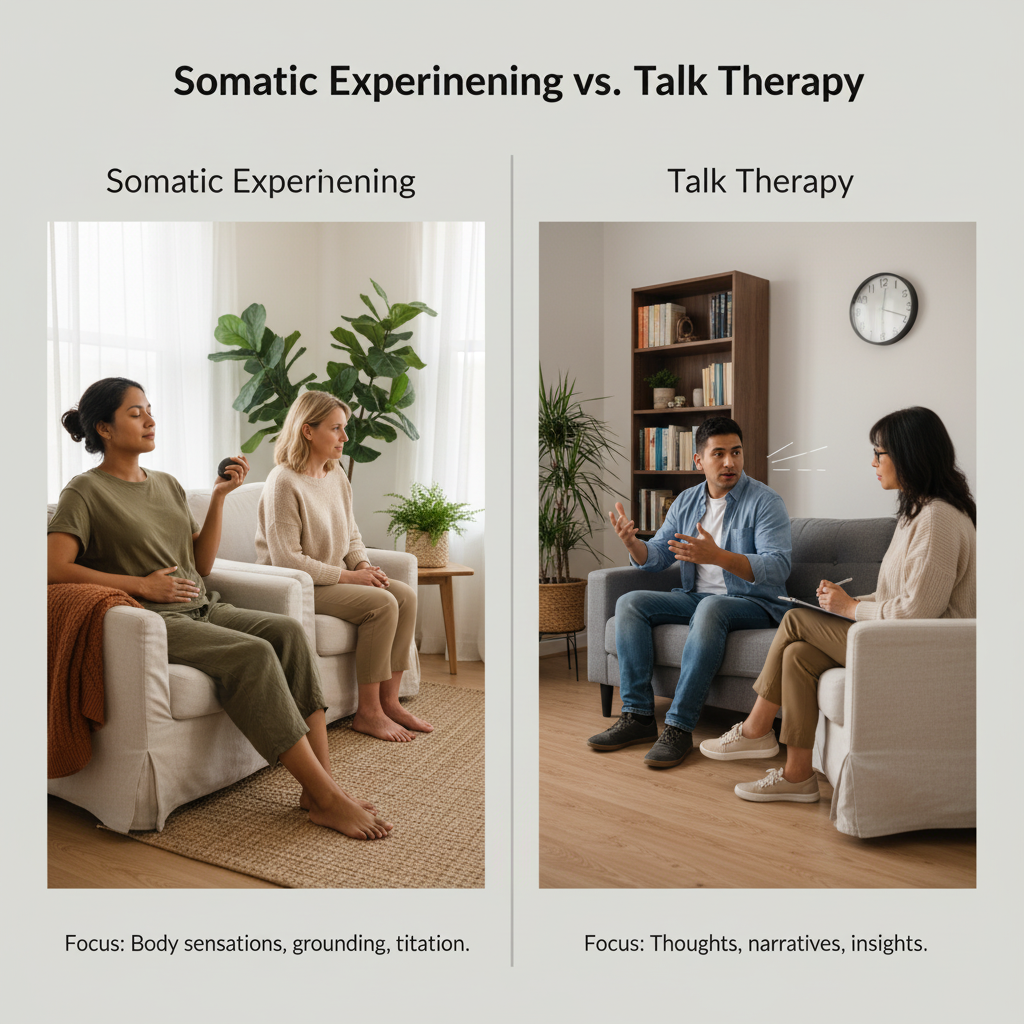
Somatic Therapy Vs. Talk Therapy
Simple practices to try now
Orienting: Gently let your eyes move around the room. Name 5 neutral or pleasant things you see. Notice any small shifts in your breath or shoulders.
70/30 body scan: Spend 30 seconds noticing a tense or activated area. Then spend 70 seconds with a neutral or pleasant area (hands, feet, seat). Repeat once.
Ground–gaze–exhale: Feel your feet on the floor, let your gaze rest on something steady, and exhale slightly longer than your inhale for 1–2 minutes. If anything feels too much, stop and return to what feels supportive. Your system sets the pace.
Is Somatic Experiencing right for you? SE can be helpful for:
Single-incident trauma (accidents, medical events)
Complex or developmental trauma
Anxiety, chronic stress, burnout
Grief, medical procedures, pain syndromes
Feeling “stuck” in patterns despite insight
What to expect when working together at Intentional Growth
Collaborative pacing: We move at the speed of safety, checking in often.
Choice and consent: You decide what we explore and how. No pressure to share details.
Culturally attuned care: We honor how identity, context, and community shape nervous system safety.
Integration: We can blend SE with other modalities you find helpful.
A gentle note on safety SE is not a substitute for medical care. If you’re experiencing acute symptoms (self-harm urges, active substance withdrawal, or medical emergencies), please seek immediate professional support. We can coordinate care as part of a comprehensive plan.
Next step If you’re curious about Somatic Experiencing, a logical next step is a short consultation. We can discuss your goals, answer questions, and explore what support would feel safest and most effective for you.
To book an initial session or consultation, visit Intentional Growth’s contact page or reach out directly. Your body’s wisdom is not the problem—it’s the path forward.
