
Wildfire Smoke and Your Mental Health: Coping With Eco-Anxiety in Ontario
What the hazy skies over Durham Region can stir up emotionally, and how to steady yourself
If the past few days have left you feeling unusually on edge, foggy, or low, you're not imagining it. Northern Ontario's wildfires have sent thick smoke drifting south, leaving many parts of the province, including here in Durham Region, under some of the worst air quality conditions in the world. Skies have turned orange, outdoor plans have been cancelled, and for a lot of people, the physical discomfort of the smoke has come paired with something less visible: a quiet undercurrent of anxiety, grief, or dread.
That reaction has a name: eco-anxiety, and it's worth understanding, especially if this is a pattern you expect to keep encountering as wildfire seasons intensify.
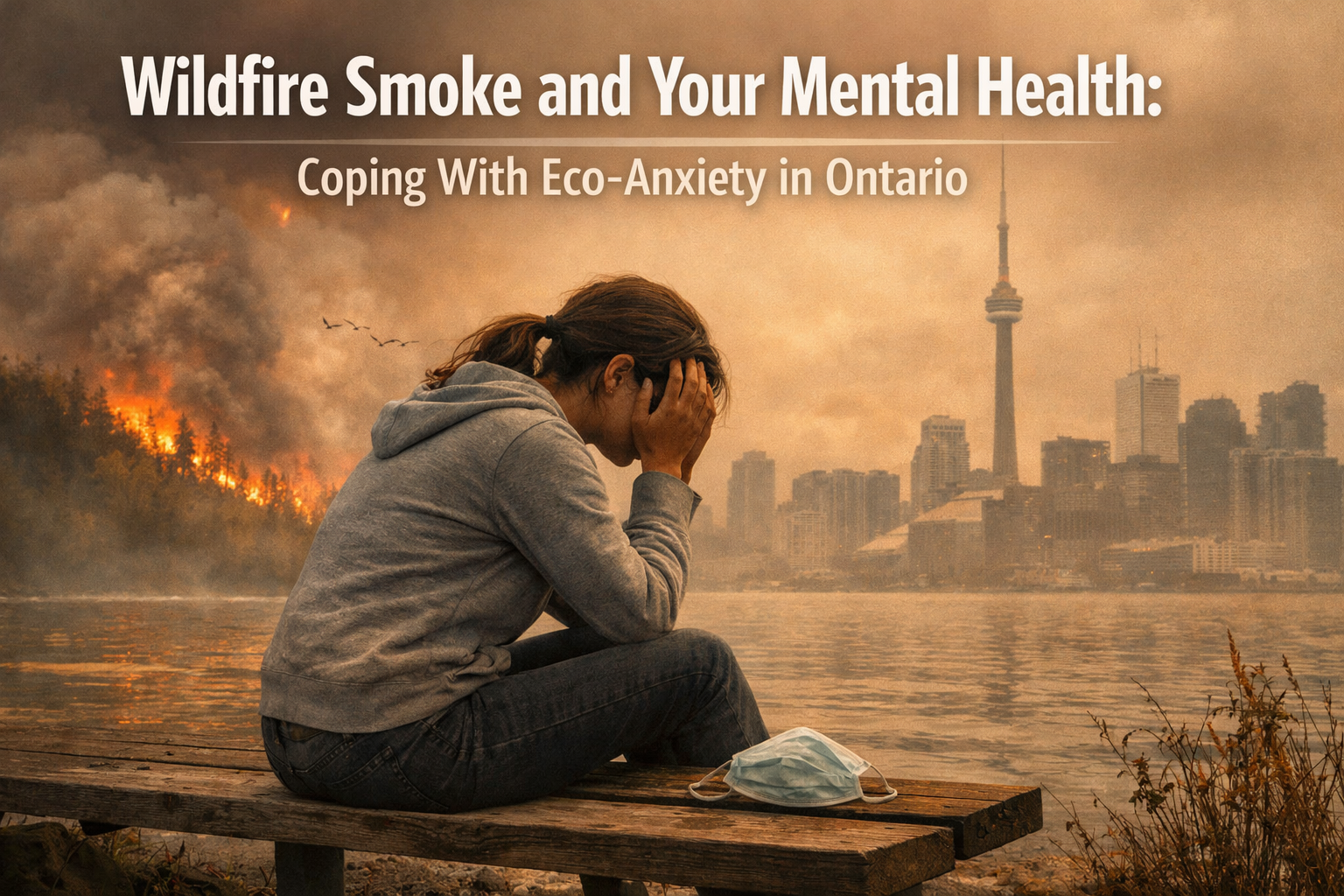
Wildfire Smoke and Your Mental Health: Coping With Eco-Anxiety in Ontario
Why Wildfire Smoke Affects More Than Your Lungs
It makes sense that hazardous air quality affects your body. But it affects your nervous system too, for a few overlapping reasons:
Uncertainty is inherently stressful. Air quality can shift day to day, and it's hard to plan around something so unpredictable. Not knowing whether tomorrow will be safe to go outside keeps the nervous system in a low hum of vigilance.
It's a visible reminder of a bigger problem. An orange sky is hard to rationalize away. For many people, it brings up worry not just about today's air quality, but about climate change more broadly, a feeling researchers and clinicians now commonly refer to as eco-anxiety.
Disrupted routines add up. Cancelled outdoor plans, closed pools and programs, and being stuck indoors during the summer can chip away at mood, especially for people who rely on movement or time outside to regulate their stress.
Smoke can mimic or worsen physical anxiety symptoms. Shortness of breath, chest tightness, headaches, and fatigue from smoke exposure can be easily confused with, or can amplify, the physical sensations of anxiety, making it hard to tell where one ends and the other begins.
Signs Eco-Anxiety Might Be Showing Up for You
Eco-anxiety doesn't always look like panic. More often, it looks like:
A persistent low-grade worry about air quality, weather, or "what's next"
Doom-scrolling wildfire maps or air quality apps
Irritability or restlessness from being stuck indoors
Guilt about small things, like wanting to enjoy summer despite what's happening up north
A sense of helplessness about a problem that feels too big to do anything about
Grief for the people, land, and wildlife affected by the fires themselves
If any of that resonates, your reaction is a normal response to a genuinely difficult and ongoing situation, not a sign that something is wrong with you.
Ways to Steady Yourself While Conditions Improve
While you wait for the air quality to clear, a few things can help you manage both the physical and emotional toll:
Limit your exposure without obsessing over the numbers. Checking the air quality index once or twice a day is useful; checking every hour tends to feed anxiety rather than ease it.
Create a comfortable indoor space. If outdoor plans are on hold, set up something to look forward to indoors, even something small, like a favorite show, a cool room, or time with people you enjoy.
Name what you're feeling. Whether it's frustration, grief, fear, or guilt, naming the emotion out loud or in writing can take some of its intensity down a notch.
Move your body indoors. If walking outside isn't an option right now, gentle movement indoors can still help regulate a stressed nervous system.
Limit media consumption before bed. Wildfire coverage and air quality alerts are important to stay informed about, but scrolling through them right before sleep can make it harder to wind down.
Remember this is temporary, even when it doesn't feel that way. Air quality events like this one do pass, even when the timeline feels uncertain.
When to Reach Out for Support
If the anxiety, low mood, or sense of helplessness lingers well after the air clears, or if it's starting to affect your sleep, relationships, or ability to function day to day, that's a sign it may be worth talking to someone. This doesn't need to be a crisis to be worth addressing. Ongoing environmental stress, layered on top of whatever else you're already carrying, adds up.
Because a lot of us in Whitby and across Durham Region are breathing the same smoke this week, virtual sessions can be a practical option when outdoor walk-and-talk therapy isn't advisable due to air quality — the support doesn't have to wait for clearer skies.
Book a free 20-minute consultation if you'd like support processing what this season has brought up for you, whether that's eco-anxiety specifically or stress that's simply been amplified by it.
Chelsea Smith, RP, is a Registered Psychotherapist and owner of Intentional Growth Path Psychotherapy in Whitby, Ontario, offering individual, couples, and family therapy across Durham Region and Ontario through virtual, in-home, walk-and-talk, and in-person sessions.
