
Falling Back: Caring for Your Mind as the Days Get Shorter
There’s a particular moment in late October when you notice it. You leave work and it’s already getting dark. The morning commute is gloomy. Your energy dips and your motivation goes with it.
On Sunday, November 1, we “fall back” and gain an hour. It sounds like a gift, but many of us feel the change more than we expect. If you’ve felt a little flatter, more irritable, or more tired as fall settles in, you’re not imagining it, and nothing is wrong with you.

Why the shift can feel so heavy
Our bodies keep time using light. When daylight shrinks and the clocks change, our sleep, appetite, energy, and mood can all be thrown off. For some people it’s a mild dip. For others it’s more persistent and begins to affect daily life, sometimes called seasonal affective disorder. Either way, it deserves care and not criticism.
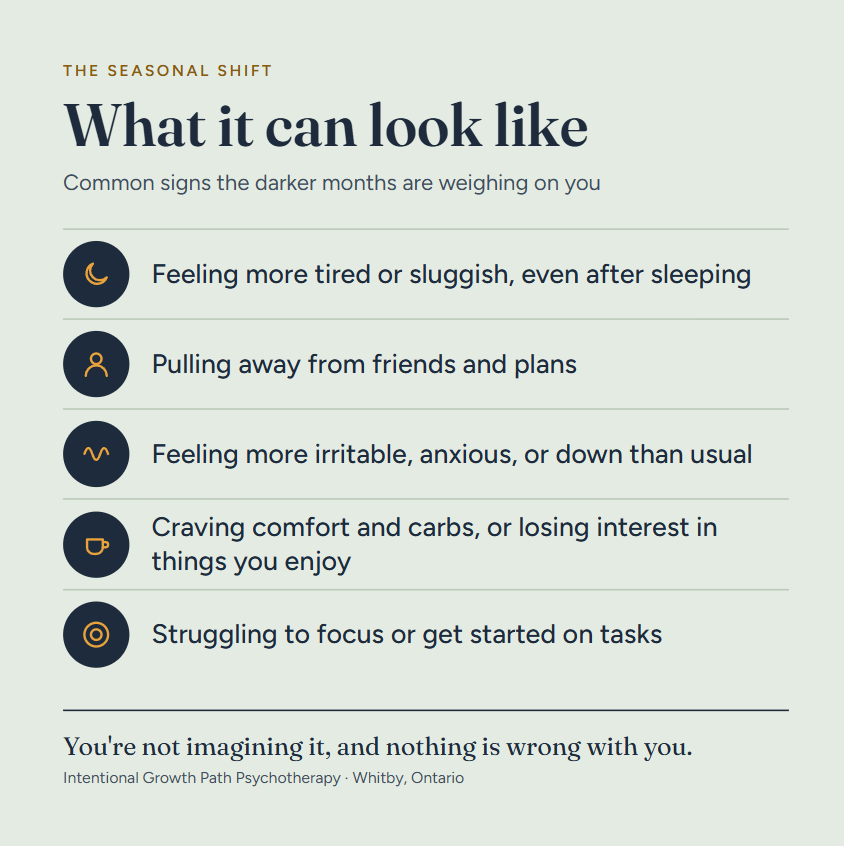
What it can look like
Feeling more tired or sluggish, even after sleeping
Pulling away from friends and plans
Feeling more irritable, anxious, or down than usual
Craving comfort and carbs, or having less interest in things you usually enjoy
Struggling to focus or get started on tasks
Gentle ways to prepare
Start shifting your routine early. Move your bedtime and wake time by 10 to 15 minutes over a few days before the change, rather than absorbing it all at once.
Chase the daylight. Get outside in the morning or at lunch, even on grey days. Outdoor light is brighter than indoor light. A short walk counts, and many people find movement grounding in itself.
Protect your evenings. As it gets dark earlier, create a soft landing: dim the lights, put the phone away a little sooner, and give your nervous system a cue that the day is winding down.
Stay connected. The pull to hibernate is real, but small, low-pressure plans (a coffee, a phone call, a walk with a friend) can make a big difference.
Lower the bar, not the care. This isn’t the season to overhaul your life. Do less, but keep a few anchors, such as a regular meal, some movement, and something that brings you comfort.
A mindful pause
Try this once a day. Stop for one minute and ask: “What do I need right now?” You don’t have to fix the answer. Noticing it is already an act of self-compassion. Seasons shift, and so do we, and we don’t have to push against that change.
When to reach out for support
If low mood, fatigue, or anxiety has lasted more than a couple of weeks, or is getting in the way of work, relationships, or daily life, it may be time to talk to someone. Therapy can help you understand what you’re experiencing and build tools that fit you. If you ever feel unsafe or in crisis, contact your doctor, go to your nearest emergency department, or call or text 9-8-8, Canada’s Suicide Crisis Helpline, any time.
I offer individual, couples, and family therapy in Whitby, in your home, by walk-and-talk, and virtually across Ontario. If you’d like support heading into the darker months, you’re welcome to book a free 30-minute consultation at intentionalgrowth.janeapp.com.
Chelsea Smith, BSc, MACP, RP, Registered Psychotherapist, Intentional Growth Path Psychotherapy, Whitby, Ontario
