
What Is the Best Remedy for Anxiety? A Therapist’s Guide to What Actually Helps
When anxiety takes over your mind and body, it’s natural to look for the best remedy for anxiety; something that brings real relief instead of temporary distraction. The truth is that anxiety isn’t caused by one single thing, so there isn’t one single fix. But there are highly effective approaches that consistently help people feel calmer, more grounded, and more in control of their lives.
This guide breaks down what actually works, what “the best thing to take for anxiety” really means, and how to choose anxiety symptoms treatment that matches your body and your life.
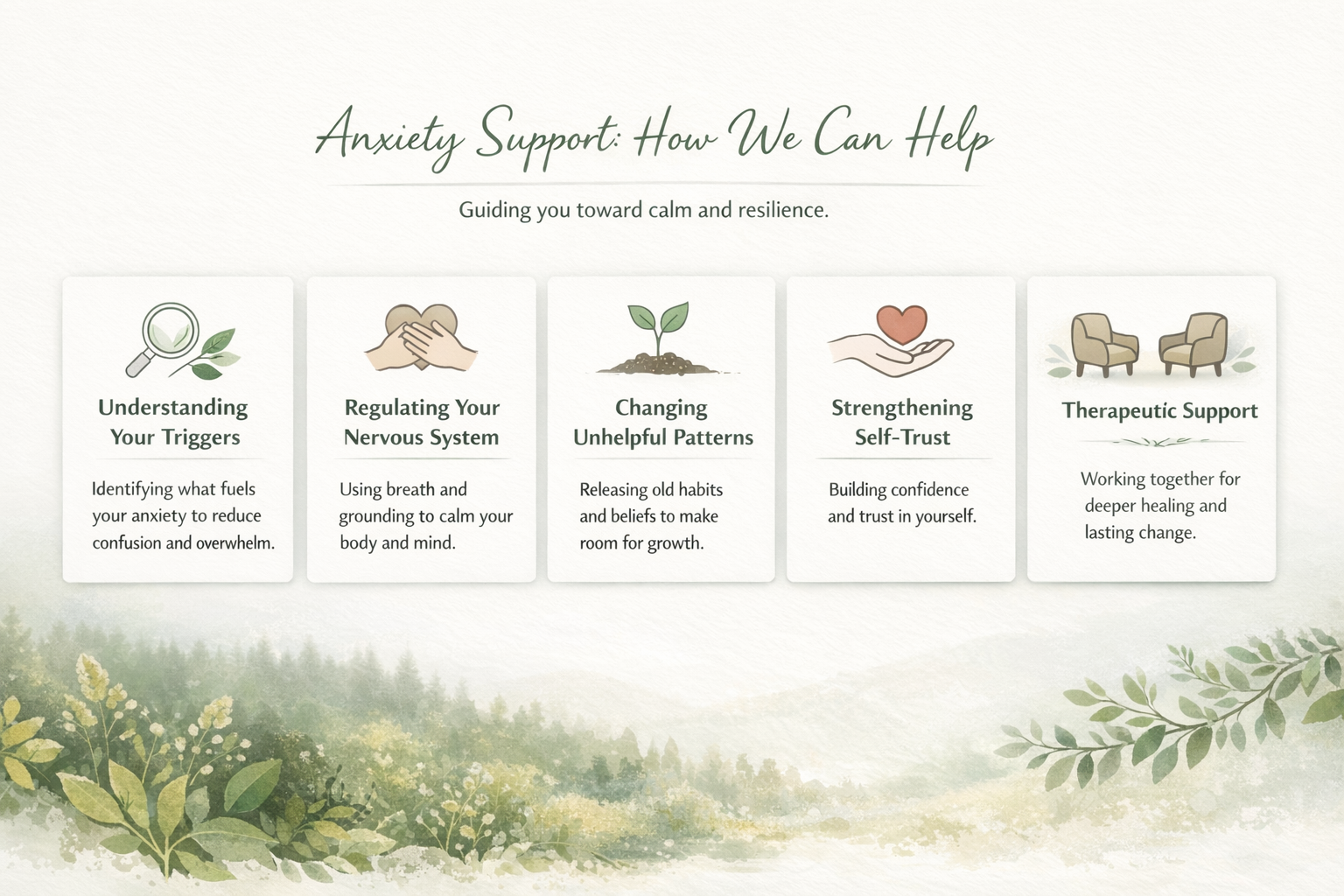
Anxiety Support in Whitby, Ontario
Understanding Anxiety: Why No Single Remedy Works for Everyone
Anxiety is both physical and emotional. It can show up as:
• racing thoughts
• muscle tension
• stomach issues
• trouble sleeping
• irritability
• overthinking or constant worry
• a sense that something is “wrong,” even when nothing is happening
Because anxiety affects the nervous system, your thoughts, and your learned coping patterns, the most effective treatment addresses all of these layers, not just one.
The Best Remedy for Anxiety: A Combination Approach
Search engines often highlight “the best remedy for anxiety,” but research consistently shows that anxiety improves most when we combine several forms of support.
These are the approaches that help most people:
1. Nervous System Regulation
The quickest path to anxiety relief usually starts with the body. Techniques like slow breathing, grounding exercises, and sensory-based regulation help shift the nervous system out of fight‑or‑flight. Over time, these practices retrain your brain to interpret stress differently.
2. Cognitive and Emotional Work
This is where CBT therapy (Cognitive Behavioural Therapy) often comes in. CBT helps you identify the thoughts and beliefs that drive anxiety, and teaches new ways to respond so you don’t get stuck in the same loops. It’s one of the most well‑researched and effective treatments for anxiety symptoms.
3. Trauma‑Informed Approaches
For many people, anxiety isn’t random; it comes from old experiences your body learned to protect you from. Trauma-informed therapy helps you understand these patterns without forcing you to relive anything before you're ready.
4. Lifestyle Adjustments
Small changes like reducing caffeine, improving sleep, and adding gentle movement can support anxiety recovery, especially when combined with therapeutic work.
The Best Thing to Take for Anxiety: What’s Actually Helpful?
People often search for the best thing to take for anxiety, hoping for a supplement or medication that removes anxiety entirely. Here’s what’s important to know:
• Medication can be helpful, especially when anxiety is severe or gets in the way of daily functioning.
• Supplements may support the nervous system, but should be used carefully and with guidance.
• No pill or supplement works without addressing the underlying patterns that keep anxiety activated.
Medication can make therapy easier, not replace it.
Anxiety Symptoms Treatment That Works Long-Term
The most effective long-term treatment usually includes:
• identifying triggers and patterns
• working through past experiences stored in the nervous system
• learning new coping strategies
• strengthening self-trust and emotional regulation
• receiving support from a trained therapist
Therapy doesn’t erase anxiety overnight, but it does give you a clearer, steadier way of responding to stress and fear.
Finding the Approach That Fits You
The real “best remedy for anxiety” is the one that helps you feel:
• less overwhelmed
• more grounded in your body
• clearer in your mind
• able to manage stress rather than being consumed by it
With the right support, your anxiety becomes something you can work with, not something that controls your life.
